Yankee Barn Homes Lincoln: Comparing Portable Sawmills for Custom Beams
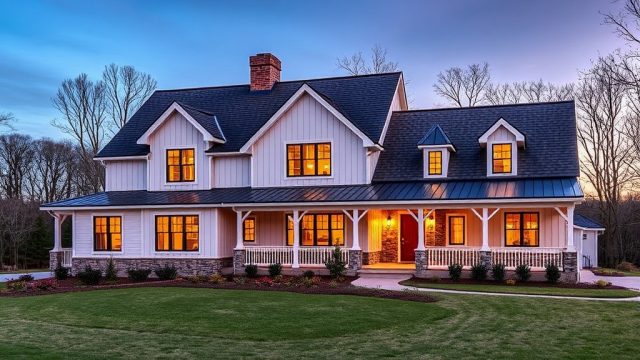
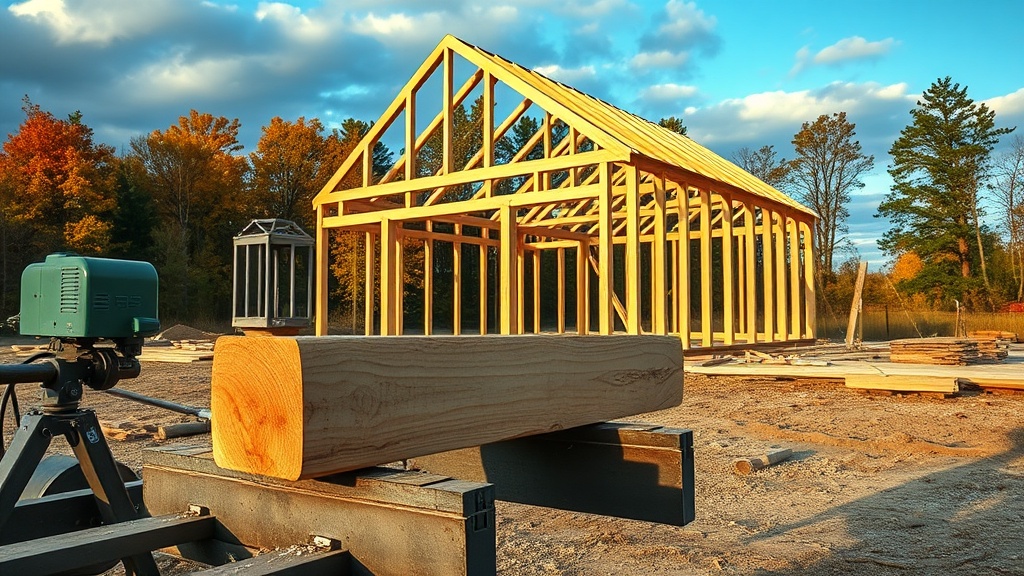
Yankee Barn Homes Lincoln owners frequently seek the authenticity of handcrafted timber, but sourcing custom-sized beams can be both costly and time-consuming. For those building a post-and-beam structure, investing in a portable sawmill offers direct control over beam dimensions, species selection, and overall project budget. This buying guide compares the leading portable sawmill models, evaluating their suitability for producing the oversized timbers typical of Yankee Barn Homes Lincoln projects, helping you decide which machine matches your site and skill level.
From dense oak to durable hemlock, the right sawmill transforms raw logs into precise 8×8, 10×10, and larger beams essential for structural stability and rustic aesthetic. We break down key specifications, operational costs, and real-world feedback from barn builders across New England.
What Beam Sizes Does a Sawmill Need to Produce for Yankee Barn Homes Lincoln Projects?
The structural core of a Yankee Barn Homes Lincoln frame relies on sizable timbers. Main posts often measure 8×8 inches (20×20 cm) or 10×10 inches (25×25 cm), while girts and rafters typically range from 6×6 to 8×8 inches. The sawmill’s throat capacity—the maximum log diameter it can handle—directly determines whether you can mill these from a single log or must glue-laminate smaller pieces.
Most portable mills with a 26-inch (66 cm) or greater log capacity can produce 10×10-inch beams from a 14-inch (36 cm) diameter log after squaring. For hemlock, which is common in New England barns, a 30-inch capacity sawmill allows you to cut full 12×12-inch (30×30 cm) ties without repositioning. The mill’s cutting head width also matters: a minimum of 26 inches permits slab removal and multiple beam cuts from one log face. Consider the Peak Girt Placement Guide for Structural Stability when calculating beam lengths—standard 16-foot (4.9 m) spans require mills with at least 12 feet (3.7 m) of track.
Which Sawmill Type Delivers the Best Beam Accuracy for Timber Framing?
Accuracy is non-negotiable when joinery relies on mortise-and-tenon connections. Portable sawmills fall into three categories:
- Manual Swing-Blade Mills: Lowest cost (starting around $3,200 GBP / $4,000 USD) but require the most operator skill to maintain consistent thickness. Ideal for occasional use with smaller logs.
- Hydraulic or Electric Mills with Tilt and Setworks: Mid-range ($6,000–$12,000 USD / £4,800–£9,600) where computer-assisted depth control and blade tilt produce beams within 1/32-inch (0.8 mm) tolerance. Best for custom joinery.
- Full CNC Production Mills: $15,000+ USD (£12,000+) offering automated scanning and multiple passes. Overkill for most Yankee Barn Homes Lincoln builds but useful for high-volume operations.
For timber framing, hydraulic mills with manual crank setworks strike the best balance—precision without the complexity of full CNC. The Yankee Barn Homes Lincoln: Advanced Timber Joinery and Bracing Hardware Techniques page details how even a 1/16-inch (1.6 mm) deviation can compromise joint strength.
Comparison Table: Popular Portable Sawmills for Custom Beams
| Model / Brand | Log Capacity (Diameter) | Max Beam Size (inches) | Power Type | Price Range (USD) | Best For |
|---|---|---|---|---|---|
| TimberKing 1220 | 28 in (71 cm) | 12×12 | Gas (28 HP) | $11,500–$13,000 | Large beams, dense oak |
| Wood-Mizer LT15 Start | 26 in (66 cm) | 10×10 | Electric (7.5 HP) | $5,500–$7,000 | Entry-level, small frames |
| Norwood HD36 | 36 in (91 cm) | 14×14 | Gas (27 HP) or Electric | $14,500–$17,000 | Oversized posts, hemlock |
| Hud-Son LumberMate 2000 | 26 in (66 cm) | 10×10 | Gas (14 HP) | $4,200–$5,500 | Budget-friendly, hemlock |
| Baker Products Cook’s AC36 | 36 in (91 cm) | 12×12 | Electric (10 HP) | $8,500–$10,000 | Accuracy, quiet operation |
All models listed can handle the 8×8 and 10×10 beams typical for Yankee Barn Homes Lincoln frames, but throughput varies. For example, the TimberKing 1220 mills a 10-foot (3 m) 10×10 beam in about 12 minutes, while the Wood-Mizer LT15 takes up to 20 minutes due to its smaller blade and lower horsepower. Factor in track length: models with a 20-foot (6.1 m) standard track allow cutting 16-foot beams without splicing.
How Does Log Species Affect Sawmill Choice for Yankee Barn Homes Lincoln Beams?
New England woods like Eastern Hemlock, White Pine, and Red Oak each demand different blade configurations and feed speeds. Hemlock—a frequent choice for barn frames due to its strength-to-weight ratio (specific gravity ~0.40)—is resinous and dulls blades faster than pine. A sawmill with a 2-inch (5 cm) wide blade running at 1,200–1,500 RPM handles hemlock without burning, whereas narrow blades (under 1.5 in / 3.8 cm) may deflect.
For Red Oak (specific gravity 0.62), which is occasionally used for decorative braces, a hydraulic feed system is recommended to prevent kickback. Portable mills with a power feed speed range of 8 to 40 feet per minute (2.4–12.2 m/min) give you the control needed for hardwoods. If your site has a mix of species, consider models with adjustable blade tension (3,000–5,000 lbs / 1,360–2,268 kg) to accommodate both softwoods and hardwoods without replacing belts.
What Are the Real Operating Costs for Milling Custom Beams?
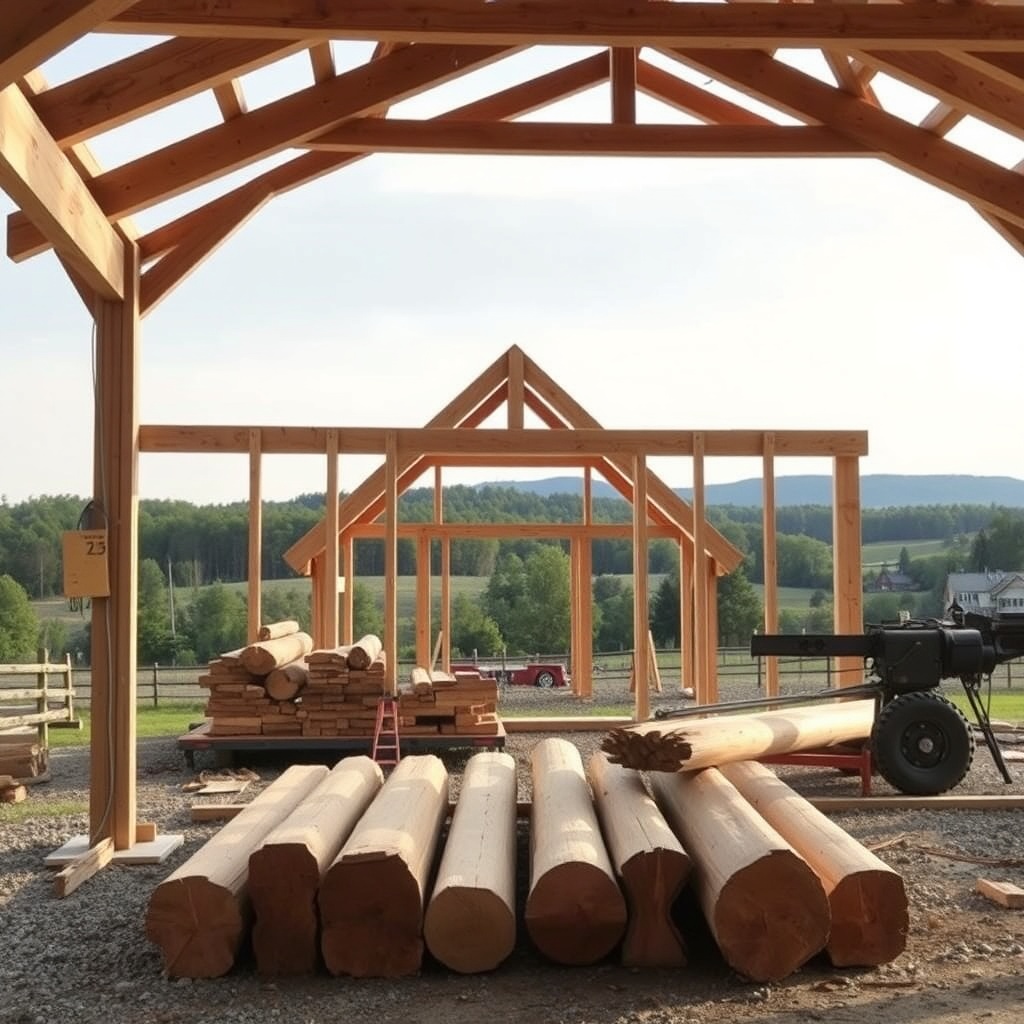
Owning a portable sawmill reduces beam cost compared to buying pre-milled timbers from a lumberyard, but operating expenses add up. Key costs per beam (based on a 16-foot 10×10 hemlock beam at current New England prices):
- Log acquisition: $150–$300 USD (£120–£240 GBP) for a 14-inch (36 cm) diameter, 16-foot log.
- Blade wear: $6–$10 USD (£4.80–£8.00) per beam. Carbide-tipped bandsaw blades (0.045 in / 1.1 mm thick) last 30–40 beams in hemlock before resharpening ($8/blade reset).
- Fuel/electricity: $3–$7 USD (£2.40–£5.60) per beam for gas models; electric models cost about half that.
- Maintenance: $50–$100 USD annually per 100 beams for guide bearing replacement and belt changes.
Total per beam: $170–$320 USD (£136–£256 GBP). In contrast, buying a 16-foot 10×10 kiln-dried hemlock beam from a supplier runs $600–$900 USD (£480–£720 GBP). Milling your own yields 30–50% savings, not including labor. If your Yankee Barn Homes Lincoln project requires 50 beams, you could save $15,000–$25,000 USD (£12,000–£20,000 GBP) over retail. However, the Stone Foundation Repair and Retrofit Techniques article notes that improper beam support can negate savings, so invest in quality base preparation.
How Important Is Portability and Setup on a Barn Building Site?
Most Yankee Barn Homes Lincoln builds occur on rural, sometimes sloped, terrain. Portable sawmills weighing 1,500–3,500 lbs (680–1,590 kg) require a truck or trailer for transport. Models with foldable designs—like the Norwood HD36 with a 30-second folding track—reduce setup time to under an hour. Conversely, fixed-base mills like some Wood-Mizer models need a flat concrete pad.
Consider these logistics:
- Track length: 20–24 feet (6.1–7.3 m) standard; longer tracks for 24-foot beams require modular extensions (adds $1,000–$1,500 USD).
- Leveling system: Screw jacks on each corner allow adjustment on uneven ground. Models with 4-inch (10 cm) stroke jacks work best on New England slopes.
- Storage: Mills with blade covers and weather shields protect the unit when not in use, essential in rainy climates.
For a DIY builder who moves the sawmill between two building sites annually, a trailer-mounted model (like the Hud-Son LumberMate with hitch option) adds $800–$1,200 USD but eliminates the need for a flatbed truck.
What Owners Say About Milling Beams for Yankee Barn Homes Lincoln
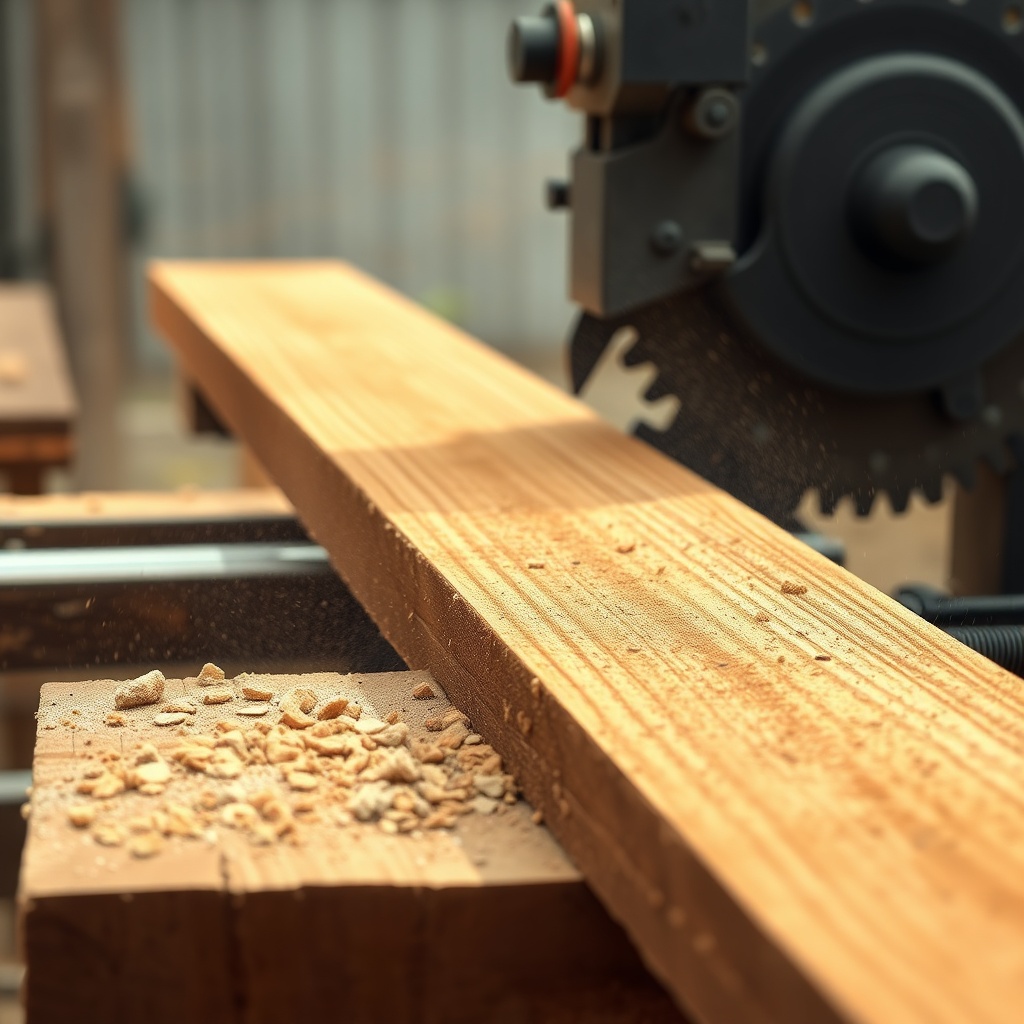
Dale R., a builder in Vermont who completed a 1,200 sq. ft. (111 m²) Yankee Barn Homes Lincoln frame, uses a TimberKing 1220: “We milled all our 8x8s from local hemlock. The first beam took me 30 minutes to get right, but after a dozen, each took 12 minutes. I saved $8,000 (£6,400) versus buying from a mill. The accuracy is good enough that my joinery fit tight without shimming.”
Susan M., a homeowner in New Hampshire, opted for the Wood-Mizer LT15: “We only had 12 beams to cut for our 24×30-foot barn. The electric model runs quieter than a generator, and I didn’t need a big truck. But the manual crank to adjust depth gets tiring after four beams. I wish I’d gone with hydraulic for the last few.”
Other owners emphasize blade sharpness: “Swap the blade after every 30 beams in hemlock—even if it looks fine—or your beam edges will fray,” says Jonathan K., a barn framer with 15 years experience. He also notes that milling on a wet log (above 20% moisture content) reduces blade life by 40%. For detailed joinery techniques that benefit from precise beam surfaces, see Yankee Barn Homes Lincoln: Advanced Timber Joinery and Bracing Hardware Techniques.
Frequently Asked Questions
Can I mill beams for a Yankee Barn Homes Lincoln frame with a $3,000 sawmill?
Yes, but expect limitations. A manual swing-blade mill like the Hud-Son LumberMate 2000 can cut 8×8 beams if the log diameter is at least 14 inches (36 cm). However, thickness control may vary by 1/8-inch (3 mm), requiring planing for precise joinery. Budget for a planer ($500+ USD) or factor extra fitting time.
How long does it take to mill a 16-foot 10×10 beam from a hemlock log?
Average time: 15–25 minutes for a first beam, then 10–15 minutes per subsequent beam on a mid-range hydraulic mill. This includes two passes for squaring and one final pass for dimension. Manual mills add 5–10 minutes per beam due to slower cranking.
What blade is best for milling oak beams for barn posts?
Carbide-tipped bandsaw blades with 1.5-inch (3.8 cm) width and 4 teeth per inch (TPI) work well for oak. For 10×10 beams, consider a 3/4-inch (1.9 cm) blade with 4 TPI for smoother cuts, but feed speed reduces to 5–8 feet per minute (1.5–2.4 m/min) to prevent burning.
Do I need a diesel generator to run an electric sawmill off-grid?
Most electric mills (7.5–10 HP) draw 5,600–7,460 watts at full load. A 10,000-watt gasoline generator ($1,500–$2,500 USD) suffices, but a diesel unit ($3,000+ USD) offers better fuel efficiency for extended runs (8+ hours). Plan for 2–3 gallons (7.6–11.4 L) of diesel per 8-hour day.
Can I use the sawmill to cut beams for the septic system platform?
Yes, but the beams under a septic tank require pressure-treated lumber or naturally rot-resistant species like cedar. Milling your own treated beams is not recommended due to chemical leaching. Instead, purchase treated 6x6s for that specific application. For details, see Yankee Barn Homes Lincoln: Septic System Installation and Considerations.
What safety gear is essential for portable sawmill operation?
Minimum: Safety glasses, hearing protection (foam plugs under muffs for 100+ dB), chainsaw chaps for leg protection, and a dust mask (N95) for hemlock dust, which can cause respiratory irritation. Never operate the mill wearing loose clothing, and keep a fire extinguisher nearby due to dry sawdust.