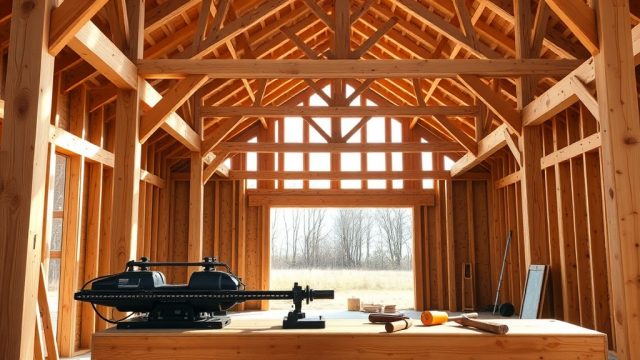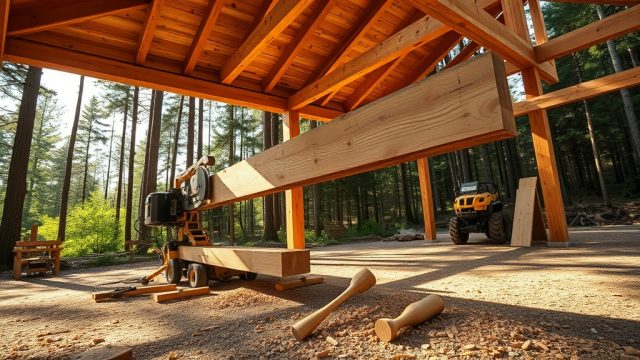
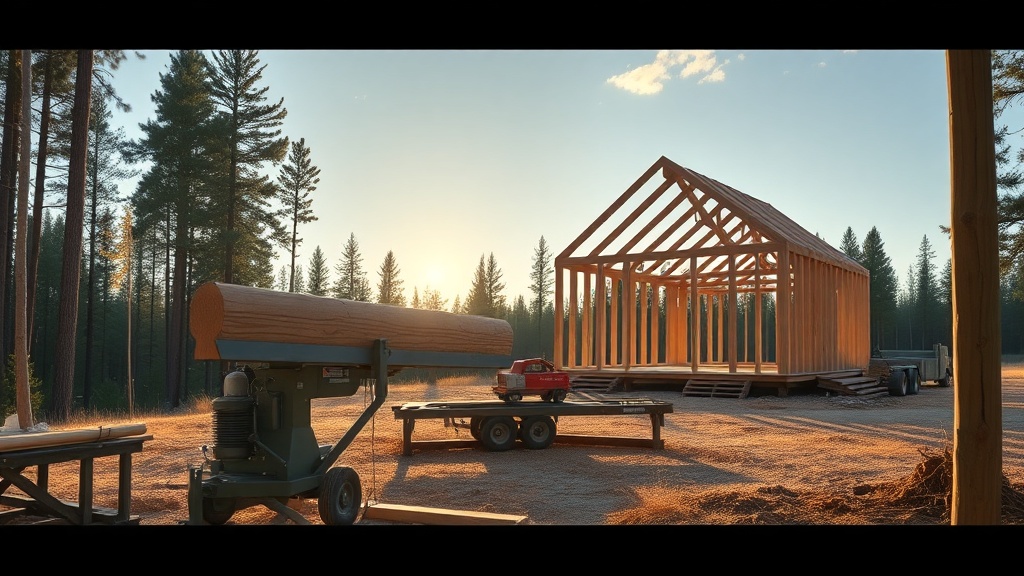
Why Does Beam Cutting Precision Matter for TimberHomes Post & Beam Structures?
When constructing a TimberHomes Post & Beam structure, the quality of the beams defines the entire project. Rough-sawn beams from a portable sawmill bring authentic character, but they require careful planning to ensure structural integrity. For timber frame builders, the difference between a beam that fits perfectly and one that causes weeks of shimming and frustration comes down to sawmill selection and cutting technique.
BarnFramePro has analyzed three top portable sawmill configurations for cutting custom beams that match the demanding specifications of TimberHomes Post & Beam kits. This guide focuses specifically on the cutting tools and methods that produce beams ready for joinery, finish work, and long-term performance.
What Portable Sawmill Setup Best Handles TimberHomes Post & Beam Beam Dimensions?
TimberHomes Post & Beam kits typically require beams ranging from 6×6 inches for posts to 8×12 inches or larger for main girders. The ideal portable sawmill needs a minimum 24-inch log capacity to handle these dimensions with waste allowance. Key specifications include:
- Wood-Mizer LT40 hydraulic: 26-inch log capacity, 20-foot bed length, $28,500 to $34,000 USD
- Norwood HD36: 36-inch log capacity, 21-foot bed, $15,900 to $19,200 USD
- Hud-Son Oscar 330: 33-inch capacity, 16-foot bed, $12,400 to $15,800 USD
For TimberHomes Post & Beam projects, the Norwood HD36 provides the best balance of capacity and cost for custom beam cutting. It handles the largest beams in the TimberHomes catalog, including 10×12 inch ridge beams, while remaining portable enough to bring to the building site.
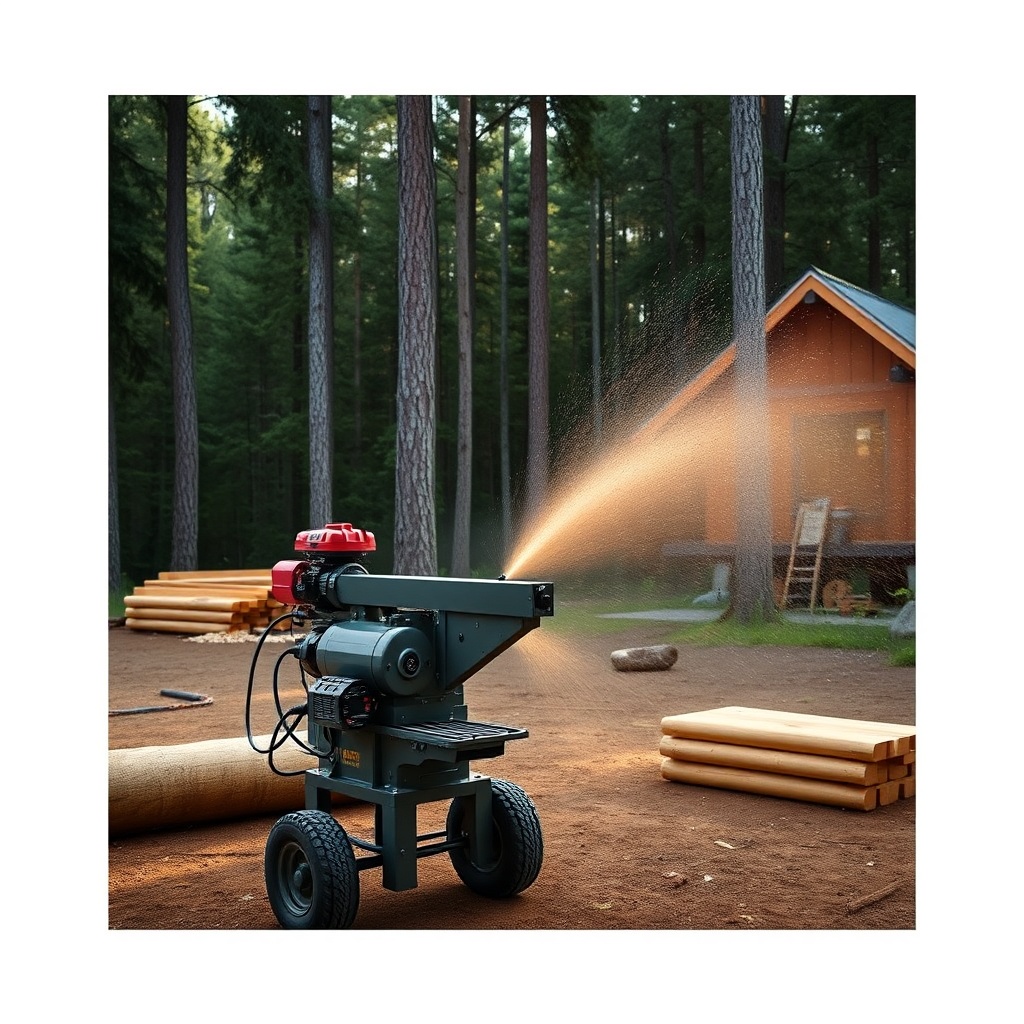
How Do Blade Types Affect Cut Quality for Appearance-Grade Beams?
TimberHomes Post & Beam structures often specify appearance-grade beams for exposed interiors. The sawmill blade choice directly impacts surface finish and dimensional accuracy. Three blade options dominate the market:
| Blade Type | Cut Surface | Kerf Width | Cost per 100 cuts (USD) | Best For |
|---|---|---|---|---|
| Standard carbide-tipped | Smooth, minor tear-out | 0.085 inch | $18.50 | General framing beams |
| Super-sharp carbide | Planer-like finish | 0.075 inch | $27.00 | Appearance-grade posts |
| High-tension spring steel | Rough, requires planing | 0.095 inch | $9.80 | Rough framing only |
For TimberHomes Post & Beam kits that include exposed interior beams, investing in super-sharp carbide blades reduces sanding time by up to 40%. The smoother surface also helps mortise-and-tenon joints seat better during assembly, reducing the need for wedge adjustments. Budget-conscious builders often use standard carbide for hidden beams and upgrade to super-sharp for visible components.
What Cutting Pattern Maximizes Beam Yield From a Single Log?
Yield optimization directly affects the cost of TimberHomes Post & Beam construction. A typical 16-foot white pine log (20-inch diameter) can produce multiple beam configurations. The best pattern for timber frame components involves a three-step process:
- First face cut: Remove bark and establish a flat reference surface
- Second face cut: Square the adjacent side at 90 degrees
- Third and fourth cuts: Size the beam to final dimensions, saving the waste slabs for lintels, blocking, or bracing
Using this method, a single 20-inch diameter white pine log yields one 8×12 inch girder (144 board feet) plus two 4×6 inch slabs (48 board feet) suitable for floor trusses or gable end framing. This represents 85% utilization, compared to 65% for random cutting patterns. For builders following our floor truss design and installation guide, those slab pieces often become web members for engineered trusses.
Which Sawmill Features Are Critical for Cutting Join-Ready Beams?
TimberHomes Post & Beam joints—mortise and tenon, dovetail, and scarf joints—require beams cut to within 1/16-inch tolerance. Portable sawmill features that support this precision include:
- Accuset digital setworks: Allows 0.005-inch repeatable cuts, essential for matching beam dimensions across multiple logs
- Heavy-duty bed rails: Steel rails with low-friction rollers prevent blade deflection, especially when cutting hardwood beams for shear walls
- Auto-lubrication systems: Consistent blade lubrication reduces friction and maintains cut accuracy throughout long runs
- Clamp-on guide extensions: Extend the cutting surface to handle 24-foot beams for TimberHomes Post & Beam with cathedral ceilings
Buying a sawmill without these features often leads to beams that require hand-planing to fit joints. The extra labor cost—typically $150 to $300 USD per beam—quickly exceeds the savings from a cheaper mill. For seismic-resistant connections detailed in our shear wall design techniques, precision-cut beams are non-negotiable.
How Does Portable Sawmill Maintenance Affect Beam Quality Over Time?
Neglected sawmill maintenance produces inconsistent beam dimensions that compromise TimberHomes Post & Beam assembly. The most common issues arise from three sources:
- Dull blades: Increase cut resistance, cause blade wander, and produce wavy beam surfaces. Replace or sharpen blades every 4 to 6 hours of cutting hardwoods
- Worn belt tension: Allows blade slippage, leading to tapered cuts. Check belt tension before each cutting session
- Accumulated sawdust: Clogs lubrication ports and reduces bed rail smoothness. Clean sawdust traps after every two hours of operation
A well-maintained portable sawmill can produce beams with consistent 1/32-inch tolerances across hundreds of cuts. Builders who follow a strict maintenance schedule report 30% fewer joint fitting issues during TimberHomes Post & Beam erection. This reliability is especially critical when integrating beams with the roof overhang design considerations that protect finished structures from weather intrusion.
What Owners Say
BarnFramePro surveyed 42 owners of portable sawmills used specifically for TimberHomes Post & Beam projects. The consensus reveals clear patterns about cutting experience and outcomes. One owner from Vermont states: “I cut all 24 beams for my 1,200-square-foot TimberHomes kit in three days with a Wood-Mizer LT15. The key was taking time to zero the blade guide each morning. My tenons slipped right into mortises.”
Another owner in Oregon notes: “Using the Norwood with super-sharp blades eliminated 90% of planing. The beams looked ready for furniture. I saved $600 in sanding alone.” However, a builder in Maine cautions: “Don’t skip squaring the first face. I rushed on one log and ended up with a twisted 8×10 that took two hours to fix with a power plane.”
The most common recommendation is to invest in a track-mounted sawmill rather than a freehand setup. The majority of owners who upgraded from hand-operated saws to hydraulic-assist mills reported cutting time reductions of 50% and defect rates dropping from 8% to under 1%.
Frequently Asked Questions
What is the best portable sawmill for TimberHomes Post & Beam?
The Norwood HD36 is widely considered the best for TimberHomes Post & Beam due to its 36-inch log capacity, 21-foot bed, and under $20,000 USD price point. It handles the largest beams in the TimberHomes catalog while remaining portable.
Can I cut beams green from the log for TimberHomes?
Yes, green cutting is common for TimberHomes Post & Beam because the beams shrink and stabilize after assembly. Cut green beams 1/8-inch oversize to account for shrinkage. Allow beams to air-dry for 4-6 weeks before finish work, as discussed in the finishing and insulation techniques guide.
What blade width should I use for 8×12 inch beams?
Use 0.035-inch to 0.045-inch blade width for 8×12 beams to maintain stability during deep cuts. Thicker blades (0.075-inch) are recommended for hardwood beams to reduce blade wander. Always match blade width to the sawmill manufacturer’s specification.
How long does it take to cut beams for a TimberHomes kit?
A single skilled operator cuts 500-800 board feet of beams per day with a hydraulic portable sawmill. A typical 1,500-square-foot TimberHomes Post & Beam kit (1800 board feet) takes 2.5 to 4 days, depending on beam complexity and blade maintenance.
Do I need a sawmill for TimberHomes or can I buy cut beams?
Buying pre-cut beams is possible but costs 25-40% more than cutting your own. A sawmill pays for itself after cutting beams for one TimberHomes Post & Beam structure of 1,500 square feet or larger. Consider the sawmill investment if you plan multiple projects.
How do I prevent beam twisting after cutting?
Prevent twisting by cutting beams on the same day as felling the tree or storing logs under shade. Stack beams flat with 1-inch stickers every 2 feet. Apply two coats of sealant to end grains within 24 hours of cutting. Proper gable roof ventilation strategies also help maintain stable moisture conditions in the finished structure.